

As a cybersecurity professional with more than 15 years defending networks of countless small and medium-sized businesses—I’ve watched threat landscapes evolve from script-kiddie exploits to nation-state campaigns. The recent announcement of Anthropic’s Project Glasswing marks one of the most significant inflection points I’ve seen. For the first time, frontier AI is being deliberately weaponized for defense at industrial scale, and Cisco’s role as a launch partner positions it to deliver that advantage directly to the SMBs that form the backbone of the American economy.
What it Means for Cybersecurity
Project Glasswing is not marketing hype. Anthropic has developed Claude Mythos Preview—an unreleased frontier model with exceptional autonomous coding, reasoning, and vulnerability-discovery capabilities. In controlled testing, it has independently surfaced thousands of high-severity zero-days in major operating systems, web browsers, FFmpeg, the Linux kernel, and even 27-year-old flaws that survived millions of automated tests and decades of human review. The model doesn’t just find bugs; it chains exploits, develops working attacks, and does so without human steering.
Instead of releasing this power publicly (where attackers could weaponize it within minutes), Anthropic restricted access to a closed consortium of defenders—including Cisco, Microsoft, Google, AWS, Apple, CrowdStrike, Palo Alto Networks, and the Linux Foundation. The explicit goal: give the good guys a durable head start.
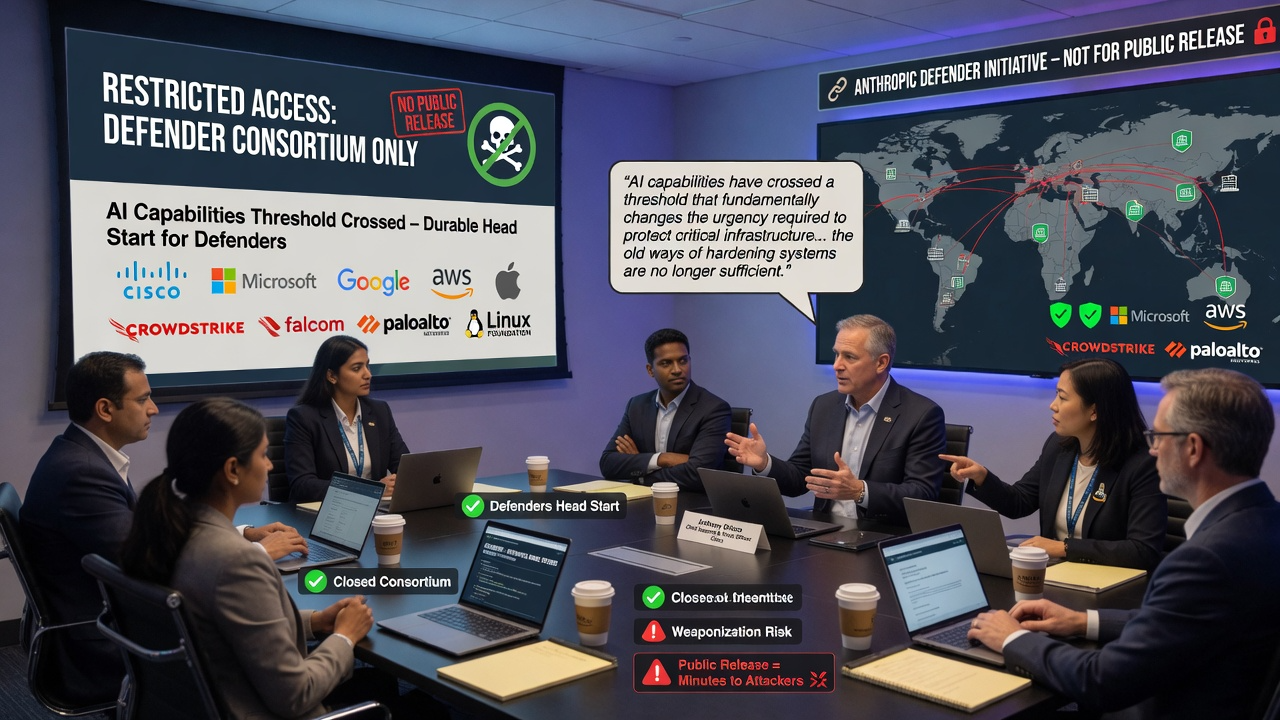 Cisco’s Chief Security & Trust Officer, Anthony Grieco, put it bluntly: “AI capabilities have crossed a threshold that fundamentally changes the urgency required to protect critical infrastructure… the old ways of hardening systems are no longer sufficient.”
Why Cisco’s Participation Translates Directly to SMB Wins
Cisco isn’t just another logo on the partner list. As a launch partner, Cisco is already feeding Claude Mythos Preview into its own product development and infrastructure-hardening pipelines. This means:
- Faster, deeper vulnerability remediation across Cisco’s hardware and software stack—routers, firewalls, switches, endpoints, and cloud services.
- Accelerated creation of next-generation defensive tools that operate at machine speed against AI-powered adversaries.
- Strengthened foundational security for the open-source components that underpin virtually every SMB network (Linux kernels, browsers, libraries). SMBs have never had the budget for 24/7 red-team testing; now the industry’s biggest players are doing it on their behalf.
For small and medium businesses—often the most attractive targets precisely because they lack dedicated security teams—this is transformative. Cisco already offers purpose-built SMB solutions: Secure Firewall, Umbrella DNS security, Duo multi-factor authentication, SecureX orchestration, and the all-in-one Secure SMB bundle. These aren’t stripped-down toys; they deliver enterprise-grade protection thatis easy to deploy and manage through cloud dashboards. With Glasswing capabilities now flowing into Cisco’s development cycle, these products will incorporate proactive, AI-augmented vulnerability hunting and threat blocking that smaller vendors simply cannot replicate.
The Sustainable, Long-Term Cyber-Resilient Advantage
Here’s why this partnership delivers lasting resilience rather than a temporary patch:
- Defender’s Edge in the AI Arms Race AI lowers the bar for attackers. A moderately skilled criminal can soon launch exploits that once required nation-state resources. Cisco’s integration of Mythos-level capabilities keeps its customers ahead of that curve. Fixes ship faster, detection rules update in real time, and new products emerge with security baked in from day one—not bolted on later.
- Supply-Chain and Foundational Security Most SMB breaches originate in the software supply chain. By hardening the operating systems, browsers, and libraries that every SMB depends on, Cisco + Glasswing reduces the attack surface before threats reach your firewall. That’s passive, always-on protection you don’t have to configure.
- Affordable Scale for Resource-Constrained Teams SMBs can’t hire a 10-person SOC or run continuous penetration tests. Cisco’s cloud-managed, AI-powered portfolio (Meraki + Secure solutions) gives you exactly that—centralized visibility, automated response, and Talos threat intelligence—without the headcount. As your business grows, the same stack scales seamlessly.
- U.S.-Based Trust and National Alignment Cisco is an American company deeply engaged with U.S. government and critical-infrastructure priorities. In an era of foreign supply-chain risks and regulatory requirements (CMMC, NIST, SEC disclosure rules), partnering with Cisco aligns your security posture with national resilience goals. Your data stays under U.S. jurisdiction and benefits from domestic innovation cycles.
- Multi-Year Commitment, Not a One-Off Project Glasswing is explicitly described as the starting point for years of industry collaboration. Cisco’s public statements make clear there is “no finish line”—only continuous advancement. SMBs that standardize on Cisco today lock in a vendor that will keep evolving its defenses in lockstep with AI progress.
Bottom Line for SMB Owners and Operators
Cybercrime already costs the U.S. economy hundreds of billions annually. SMBs shoulder a disproportionate share of that pain because breaches can shutter a local manufacturer, law firm, or healthcare provider overnight. Project Glasswing proves the industry finally recognizes the urgency. By choosing Cisco as your security partner, you don’t just buy a firewall or endpoint agent—you gain membership in the most formidable defensive coalition the private sector has ever assembled.
If you’re running or advising a small or medium-sized business, now is the time to evaluate Cisco’s SMB security portfolio. The AI era has arrived. The organizations that partner with leaders actively shaping defensive AI will be the ones still standing—and thriving—five and ten years from now.
The old ways are no longer sufficient. Cisco and Project Glasswing just made the new way accessible to every SMB that chooses to adopt it.

You must be logged in to post a comment.