
Customer data is the engine behind better products, sharper marketing, and stronger business decisions. But how a business collects and protects that data has become as important as the data itself. Privacy regulations are tightening, customers are paying closer attention, and the consequences of getting it wrong have never been more significant.
How to collect customer data securely (and why it matters more than ever)
Windows 11’s July 2026 update: What’s new and why it matters

Microsoft’s monthly Windows 11 updates are typically straightforward: you install them and move on. However, the July 2026 Security Update, which began rolling out on July 14 for Windows 11 versions 24H2 and 25H2, is worth a closer look.
Web hosting explained: How to choose the right plan for your business

Every business website needs somewhere to live. Web hosting is the infrastructure that makes that possible — the servers, storage, and software that keep your site accessible around the clock. Choosing the wrong type of hosting doesn’t just cost money; it can slow your site down, limit your ability to grow, and leave you scrambling when traffic spikes.
The health tech trends shaping care delivery in 2026

Health technology is entering a more practical phase. From virtual care and administrative AI to interoperability and data analytics, the focus is shifting from experimentation to full deployment. Here are the top trends reshaping the healthcare landscape in 2026.
Virtual care moves into routine care delivery
Virtual care involves the use of technology to provide healthcare services remotely.
Fileless malware: The threat your antivirus can’t always see

Most cybersecurity tools are built around a simple assumption: malicious software leaves files behind. Fileless malware is designed specifically to defeat that assumption. Rather than dropping a suspicious executable onto a hard drive, it operates entirely in memory, using your system’s own trusted tools against you, and leaving little to nothing for a traditional antivirus scanner to find.
Virtualization or the cloud? How to choose the right solution for your business

“We should move to the cloud” and “we should virtualize our servers” often get treated as the same conversation, but they’re solving different problems. One is about who owns and manages your infrastructure, while the other is about how efficiently you use the hardware you’ve already got.
Microsoft is ending Office 2021 support in 2026
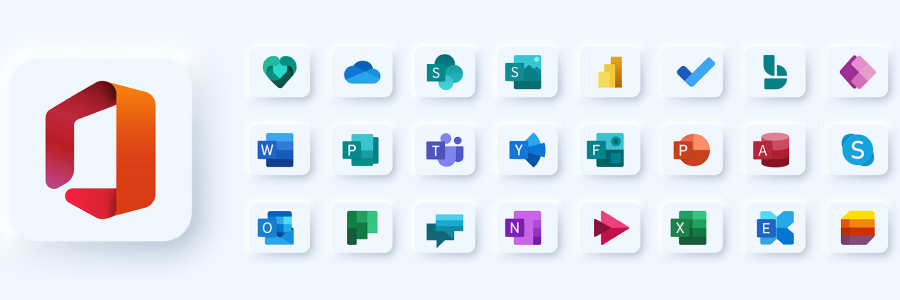
If you or your team are still running Office 2021, which houses the standalone perpetual-license versions of Word, Excel, PowerPoint, and Outlook, mark your calendar.
Business intelligence: Leveraging data to make smarter decisions

From sales figures and customer interactions to website traffic and support tickets, every business generates a vast amount of data. Business intelligence (BI) provides the tools and practices to turn raw information into actionable insights for decision-makers.
Using Microsoft 365 and CoPilot to transform your daily spreadsheet workflows

Relying on manually created tracking tools often leads to formatting errors and broken data connections across your organization. Discover how the latest processing capabilities shift software from a passive database into an active, self-correcting partner.
Want to stop your cloud storage subscription? Here’s what you need to know

Breaking up with your cloud storage provider may sound simple, but it requires a bit of strategy to avoid losing your digital life. Before you hit that “Cancel Subscription” button, you need a game plan. From hidden grace periods to the best ways to download terabytes of data without tearing your hair out, here is everything you need to know to safely offboard from your paid plan without losing a single file.